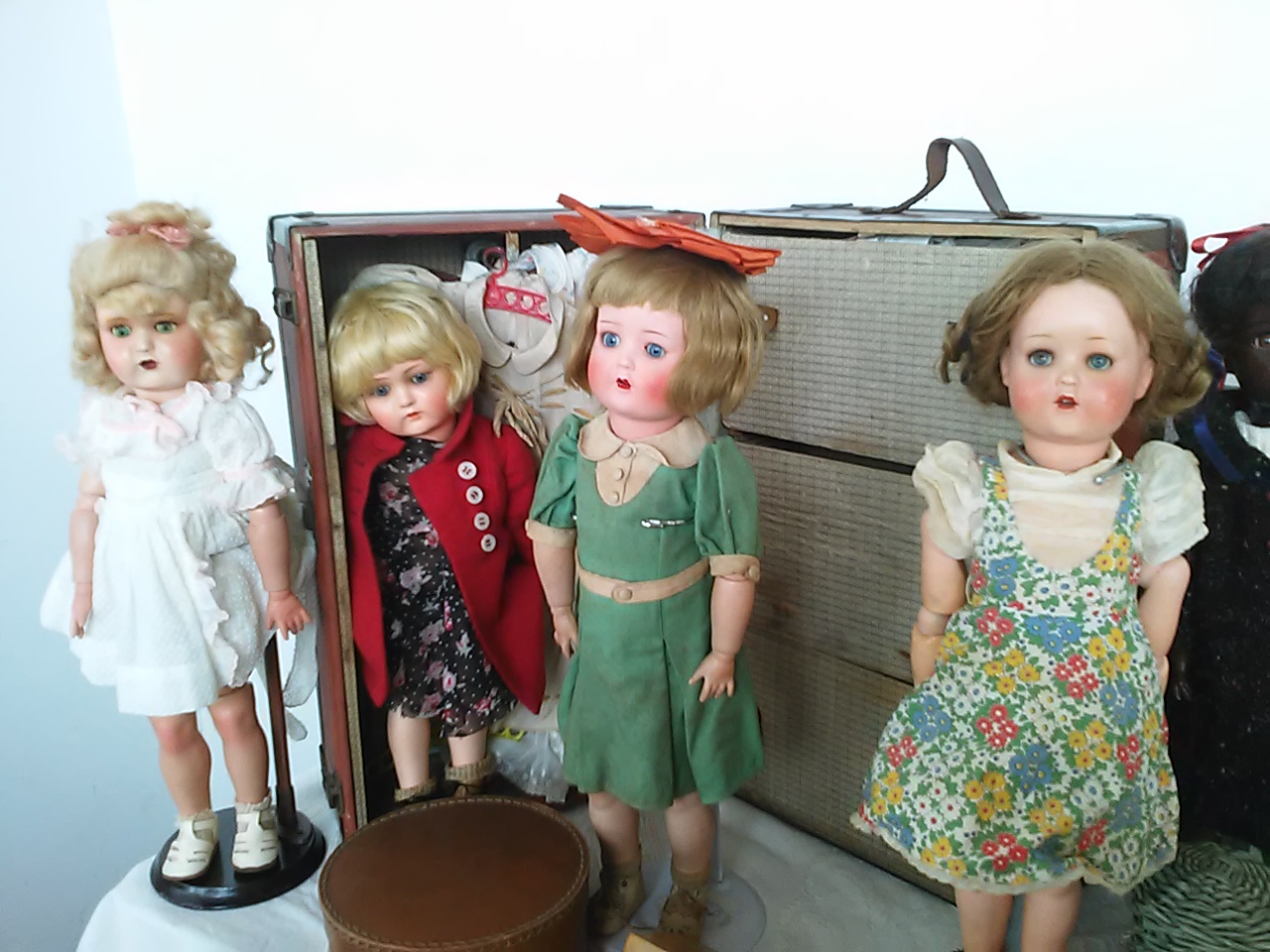
- An Introduction:
When
celluloid was invented and first came to prominence in the 1870s, dolls were
nearly all breakable and fragile--bisque and china dolls were easily shattered
and papier mache and wax easily ruined. So, it wasn't a surprise that doll
companies started experimenting with celluloid to mold dolls rather early on.
By the early 1900s, celluloid dolls were plentiful, since celluloid was easily
molded and generally inexpensive.
What is Celluloid?:
Celluloid
is one of the first synthetic plastics ever created. It is a plastic created
from wood products that includes cellulose nitrate and camphor. First created
in 1863, it was a popular material to make items as diverse as jewelry and
dolls from the 1870s through the 1930s. Celluloid, however, was not the perfect
plastic, since it is flammable and deteriorates easily if exposed to moisture,
and can be prone to cracking and yellowing with certain formulations.
Dates of Production of Celluloid Dolls:
Some
companies experimented with celluloid dolls nearly as soon as celluloid hit the
general market. For example, Bru made some of their fashion dolls with
celluloid heads, a few of which have survived to today, and other celluloid
dolls have been reported from the end of the 1800s. Celluloid dolls were
produced as late as the 1950s, but the vast majority were produced from 1900
through the 1940s.
Sizes and Characteristics of Celluloid
Dolls :
Celluloid
dolls can vary in size from only an inch or two tall to as large as 30"
for large Japanese celluloid baby or toddler dolls. However, most celluloid
dolls tend to be smaller dolls due to the lightweight nature of the plastic and
also due to its fragility.
Companies That Produced Celluloid Dolls:
Companies
in Germany, France, Italy, Japan and the United States are among the hundreds
that have produced celluloid dolls. Germany had most of the earliest
production, followed by the United States and Japan. Well-known celluloid doll
companies include Rheinische Gummi und Celluloid Fabrik Co. (turtle mark,
Germany), Petitcolin (France) and Irwin (United States).
Types of Celluloid Dolls:
Nearly
every type of doll has been made in celluloid, Kewpies, German dolly-faced
dolls (by companies including Kammer & Reinhardt), French Fashion dolls,
baby dolls, national costume dolls, and many others have been made in
celluloid. By the late 1930s and 1940s, however, most of the celluloid-made
dolls were cheaply made as either carnival prizes or National Costume Dolls.
Do Celluloid Dolls Explode?:
Well, technically they can, since celluloid is highly flammable. I have
heard of no reports of the dolls exploding, and the Celluloid dolls (and buttons)
in my collection were once subjected to temperatures over 100 degrees for over
15 hours during a local blackout, to no ill effect. However, because the dolls
were flammable and also fragile and crushable, they fell out of favor in the
mid-20th century and were not generally used to make dolls after that. If you
do have any celluloid dolls, to be safe, don't play with them outside in the
summer heat, or in front of a roaring fire.